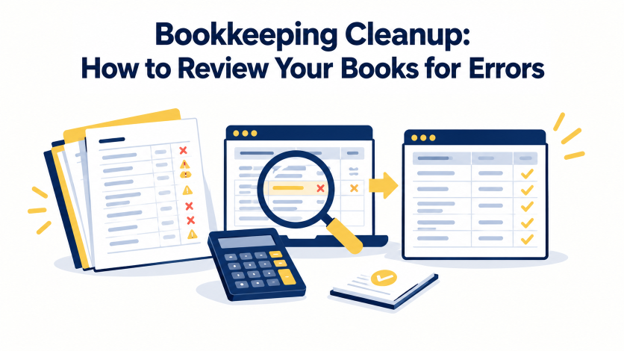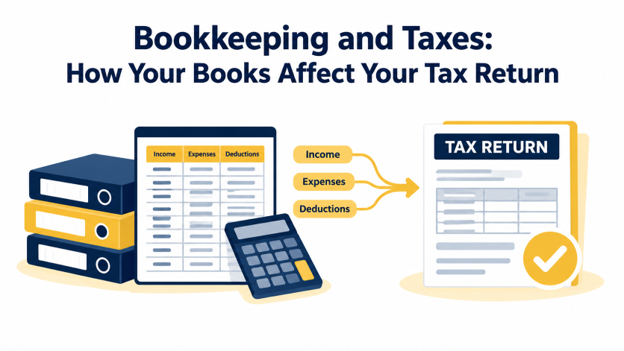
Common bookkeeping mistakes include missing transactions, mixing personal and business finances, and skipping bank reconciliation. These errors can throw off financial reports, make cash flow harder to track, and complicate tax preparation.
This guide explains the most common bookkeeping errors and shares practical steps to keep your business records accurate and organized.
To prevent these errors altogether, you can work with professional bookkeeping services to keep your books accurate and current while you focus on running your business.
7 Common Bookkeeping Mistakes and How to Avoid Them
Small business bookkeeping mistakes can start with minor oversights, and over time, they can throw off your financial records and complicate tax preparation. Here are the common bookkeeping errors to avoid.
1. Mixing Personal and Business Money
If you don’t separate your personal and business finances, you can end up paying business expenses from personal accounts or using business funds for personal reasons. For example, say you pay a $480 supplier invoice with your personal debit card but forget to record it. Your expenses end up understated, and you lack a clear record to support the deduction.
Mixing funds can also put your LLC’s liability protection at risk in certain legal situations. To avoid these problems:
- Open a business checking account and credit or debit card from day one.
- Pay yourself through scheduled transfers.
- If you use personal funds for a business expense, record the reimbursement in the same month.
2. Letting Your Books Fall Behind
Putting off bookkeeping means recording transactions weeks or months after they happen. By then, you may have forgotten what certain charges were for, leaving you to guess when categorizing expenses. You also lose sight of your current cash position.
To stay on top of your books:
- Set aside 30 minutes each week to review transactions.
- Connect your bank and credit card feeds to your accounting software
- Attach receipts as transactions come in.
Already months behind? A professional can help you with catch-up bookkeeping services before tax season arrives.
3. Skipping Bank Reconciliation
Skipping bank reconciliation means failing to match your accounting records with your bank and credit card statements. As a result, errors can go unnoticed, and you cannot rely on your reported cash balance.
To keep your records accurate, reconcile every bank and credit card account after each monthly statement closes. Investigate any differences right away, and make reconciliation a regular step in your monthly bookkeeping checklist.
4. Miscategorizing Everyday Expenses
Recording costs under the wrong account or leaving them uncategorized can lead to inaccurate financial reports and missed tax deductions. For example, coding an annual insurance premium as office supplies makes it harder to track your insurance costs and assess your profit margins.
To avoid this:
- Keep your chart of accounts simple and specific.
- Give recurring costs, such as software subscriptions, their own accounts.
- Set up bank rules to categorize regular vendor payments automatically
- Review uncategorized transactions every week.
5. Missing Contractor Tax Paperwork
Paying contractors without collecting the right tax forms can lead to filing errors and costly penalties. For example, you may pay a contractor without obtaining Form W-9 and then miss the deadline to file Form 1099.
For returns due in 2026, the IRS lists a $340 penalty per return for filing after August 1 or failing to file. The penalty drops to $60 if you correct the error within 30 days.
To avoid these penalties:
- Collect a W-9 before making the first payment.
- Track contractor payments in your accounting software so you can calculate annual totals easily.
- File the required information returns on time.
6. Ignoring Unpaid Customer Invoices
Unpaid invoices can drain your cash flow if you do not have a system to track and follow up on them. The Intuit QuickBooks 2026 Late Payments Report found that 59% of small businesses had invoices at least 30 days overdue, up from 47% the previous year. On average, these businesses were owed $17,700.
In other words, your books may show a profit while your bank account runs short of cash. To prevent this:
- State your payment terms clearly on every invoice
- Send reminders at regular intervals
- Review outstanding invoices each week.
- When practical, ask customers to pay upfront.
7. Treating Bookkeeping as Accounting
Bookkeeping and accounting serve different purposes, but many businesses treat them as the same job. Bookkeeping involves recording transactions and reconciling accounts. Accounting uses those records to prepare financial statements, analyze performance, and plan for taxes.
When you skip the accounting step, you can miss financial problems and face unexpected tax bills. To stay on top of your finances, keep your books reconciled and share them with your accountant each quarter.
Bookkeeping Best Habits That Prevent Repeat Errors
Most common bookkeeping mistakes come from missing routines rather than missing skill. Three habits prevent most repeats.
- Automate data entry: Let your accounting software import transactions and suggest expense categories.
- Review transactions weekly: Spend 15 minutes checking for duplicate entries and misclassified expenses.
- Schedule independent reviews: Have a bookkeeper or CPA check reconciliations and unusual transactions.
- Close your books monthly: Follow the same schedule each month to keep financial reports current and support better business decisions.
Keeping up with these tasks can be tough when you’re already managing sales, employees, and customers. At Karme, we offer flexible monthly bookkeeping packages that fit your expenses and transaction volume. Each package includes a dedicated bookkeeper, a client dashboard, and monthly financial reports. You get up-to-date records without spending hours managing the books yourself.
FAQs
- Can I correct mistakes from a previous year?
Yes. If the prior year’s books are still open, you can correct the entries directly. If the books are closed, record any necessary adjustments. If the tax return was filed and the errors changed reported income or deductions, you may need to file an amended return.
- Should I use cash or accrual accounting?
Cash accounting suits small service businesses with few transactions and no significant inventory. Accrual accounting works better for growing businesses with inventory, credit sales, unpaid invoices, or complex operations.
- Which reports should I review each month?
Review the profit and loss statement, balance sheet, and cash flow statement each month, plus accounts receivable and payable aging reports. Together, they show profitability, financial position, cash movement, and which balances are overdue.
- How do I record money I take out as an owner?
Sole proprietors, partners, and LLC members generally record personal withdrawals as owner’s draws. S corporation owners must record salaries through payroll and track shareholder distributions separately to maintain accurate financial records.
- How should I handle sales tax in my books?
Record sales tax collected from customers as a liability, not revenue, because you must remit it to the tax authority. Follow your filing schedule and check state rules for collection, reporting, and payment requirements.
- Are spreadsheets enough for bookkeeping?
Spreadsheets can work for businesses with few transactions. However, if your business handles more invoices, multiple accounts, and payroll, accounting software can automate your transaction imports, categorization, and reconciliation.
Final Words
To sum up, avoiding common bookkeeping mistakes comes down to keeping separate accounts, timely entries, and regular monthly review. Still, expert help makes those routines easier to sustain.
At Karme, we provide professional bookkeeping and accounting, including transaction categorization, bank and card reconciliation, catch-up bookkeeping, and monthly reporting. Our team keeps your records accurate and tax-ready, in person or virtually, so you can focus on running your business. Get in touch with us today.