
Accurate bookkeeping is the foundation of every successful small business. Following a monthly bookkeeping checklist helps you maintain organized financial records, monitor cash flow, and stay prepared for tax filing throughout the year.
In 2024, the IRS assessed more than 50 million civil penalties worth approximately $84 billion, with many penalties linked to record-keeping and reporting mistakes. A consistent bookkeeping routine helps reduce these risks by keeping your financial information accurate and up to date.
This guide walks you through a complete monthly bookkeeping checklist for small businesses, covering the essential tasks you should complete every month to keep your books organized and your business financially healthy.
If you prefer expert support, professional bookkeeping services can help ensure your records remain accurate, compliant, and ready for financial reporting year-round.
Explore Our Bookkeeping Packages
Talk to our team and find the monthly bookkeeping package that fits your business best.
Why Monthly Bookkeeping Matters for Small Businesses
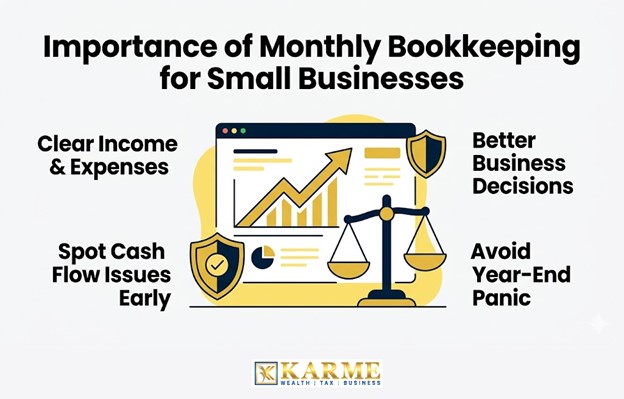
If you’re wondering why your business needs a professional bookkeeper, the answer is simple. Bookkeeping gives you a clear picture of your income, expenses, cash flow, and profits throughout the year. This helps you make better business decisions and stay prepared for tax filing and financial reporting. According to Intuit QuickBooks, 9 in 10 small business owners report that their accountant or bookkeeper has helped them in growing their business.
This is made possible by:
- Spotting cash flow gaps before they turn into a crisis
- Making confident decisions on hiring, pricing, and growth
- Avoiding the costly year-end scramble to fix months of errors.
Now, let’s look at the key tasks your monthly bookkeeping checklist should include.
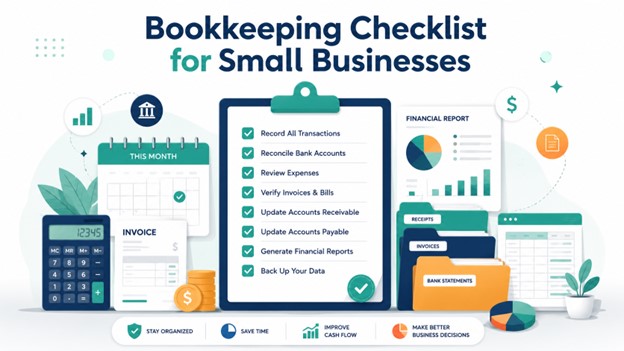
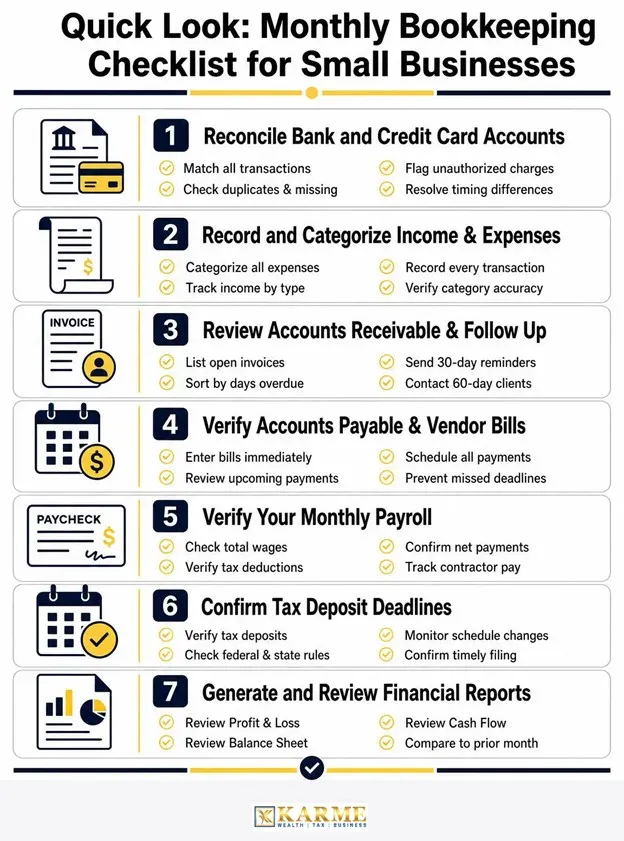
The Monthly Bookkeeping Checklist for Small Businesses
A proper bookkeeping checklist removes the guesswork from month-end financial management. Instead of trying to remember every task, you can follow the same proven process each month to keep your records accurate and up to date.
Here is what your monthly routine should cover.
1. Reconcile Bank and Credit Card Accounts
Reconciliation means comparing every transaction in your accounting software with your bank and credit card statements. This is the first critical step for your small business accounting checklist.
If your accounts are not reconciled correctly, your financial reports may contain errors. As a result, this can affect your business decisions, tax filings, and cash flow planning.
During reconciliation, you’ll need to check for:
- Duplicate transactions
- Missing transactions
- Unauthorized charges
- Incorrect amounts
- Timing differences between recorded and cleared payments
Since monthly reconciliation requires careful attention to detail, many businesses choose to outsource this task to experienced accounting professionals. Regular reconciliation not only helps detect duplicate transactions, missing entries, or unauthorized charges but also strengthens the accuracy of your financial reporting throughout the year.
2. Record and Categorize All Income and Expenses
Make sure that you record all transactions in the correct category. Any incorrect entries can create inaccurate financial reports, which, ultimately, cause problems during tax preparation.
Expenses such as rent, utilities, payroll, and software subscriptions should each be tracked separately. Income should also be organized by type, including service income, product sales, and customer refunds.
3. Review Accounts Receivable
At the end of every month, you also need to review all open invoices and look for any unpaid balances. This can help you both identify and prevent cash flow problems.
During the review process, make sure to organize unpaid invoices based on how long they have been overdue. As you do so, send payment reminders for invoices that are more than 30 days past due.
If an invoice remains unpaid after 60 days, contact the client directly by phone or email to discuss payment. Regular monitoring can help you reduce late payments and lower the chance of unpaid balances eventually becoming bad debts.
4. Verify Accounts Payable and Upcoming Vendor Bills
Your monthly bookkeeper checklist should also include a review of all vendor bills and accounts payable every month. Make sure to enter every bill received during the month immediately into the accounting system, even if payment is not due until a later date.
If you delay the recording, it can lead to missed payment deadlines, damaged relationships with suppliers, and, ultimately, harm to the company’s credit history.
5. Verify Your Monthly Payroll
According to the EY HR Processing Risk and Cost Survey, payroll errors can cost a company as much as $291 on average. That’s why you must review your payroll records every month to make sure all employee payments and payroll information are correct.
During this review, check the following details:
- Total wages earned before deductions
- Money withheld for health insurance and retirement plans
- Taxes that are applied to each payroll
- The final amount each employee received in their paycheck.
You should also keep a separate record of payments made to independent contractors throughout the year so that your 1099 tax forms are accurate when tax season arrives.
To reduce the risk of errors and avoid costly penalties, you can also work with local payroll or tax professionals in Dallas, Mckinney or surrounding areas. A professional can help you keep payroll records accurate and compliant with tax regulations.
6. Confirm Tax Deposit Deadlines
After confirming payroll amounts are correct, verify that all federal and state payroll tax deposits were submitted correctly and on time. This is important because the IRS requires businesses to follow a specific payroll tax deposit schedule based on the amount of payroll taxes the business reports.
Many small businesses are required to submit these taxes monthly, but as a business grows and payroll increases, the IRS can automatically require the company to switch to a semi-weekly deposit schedule. Business owners sometimes miss this change because they are unaware that the threshold has been crossed.
To monitor your deposit schedule correctly, you can also work with a local tax professional in McKinney . An expert can help you with payroll tax schedules, filing requirements, and compliance questions.
7. Generate and Review Monthly Financial Reports
Finally, make sure to prepare and review your monthly financial reports. Generally, these will include the following.
- The Profit and Loss statement: It shows your total income, total expenses, and whether your business made a profit or a loss during the month.
- The Balance Sheet: It lists the assets and liabilities of your business, as well as the owner’s equity at the end of the month.
- The Cash Flow Statement: This report tracks how cash enters and leaves the business through operations, investing, and financing activities.
When reviewing these reports, you will need to compare the current month’s numbers with the previous month to identify important changes. Look for unusual increases or decreases and investigate the reason for any significant change. This monthly review will help you identify financial problems early and make better business decisions.
Final Words
A consistent monthly bookkeeping routine keeps your cash flow visible, your records accurate, and your business ready for tax season without scrambling. Professional support can make a measurable difference in helping you avoid critical errors.
At Karme, we bring together cloud-based bookkeeping, payroll management, and proactive business tax planning for small businesses across Texas and beyond. We are focused on giving you the financial visibility that is needed to run your business with confidence. Reach out today to get a customized plan built around your business needs.