
Starting an LLC comes with several legal and State filing responsibilities. One of these includes receiving legal documents and official notices on time. If you miss one, your business could face penalties or even lose its good standing with the State.
A registered agent receives these critical documents on behalf of your LLC. In this guide, you’ll learn what a registered agent is for an LLC, their responsibilities, who can serve as one, and more.
For a business owner, handling this role personally can feel overwhelming. That’s why it’s best to work with a professional registered agent who can take the load off your shoulders while helping you stay compliant and on track.
What is a Registered Agent for an LLC?
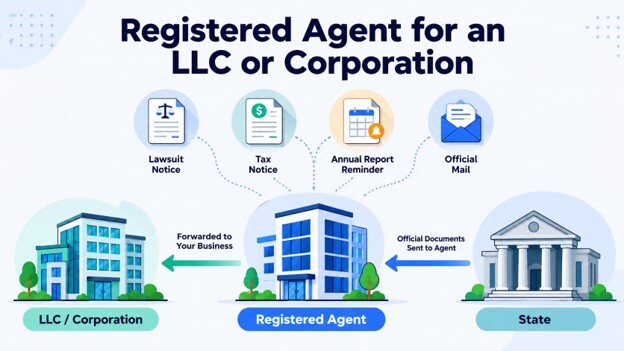
A registered agent is a person or a company that receives legal documents and official mail from the State on behalf of an LLC. This includes documents such as lawsuit notices, tax notices, annual report reminders, and other important government correspondence. As a result, they provide a reliable way for state agencies and courts to contact the business when necessary.
Is a Registered Agent Required for LLCs or Corporations?
Yes. Every State requires an LLC or corporation to have a registered agent as part of its business formation paperwork. So, when you form an LLC, you must list a registered agent in your Articles of Organization. Similarly, if you form a corporation, you must include a registered agent in your Articles of Incorporation. Without this information, the State will not approve your business formation documents.
Also, having a registered agent is not an individual preference, but part of the State’s laws. Moreover, your business must continue to have a registered agent for as long as it operates. It will stay tied to the entity’s “good standing” status throughout your business’s lifespan.
What Does a Registered Agent Do?
A registered agent receives important legal and government documents, including state tax and IRS notices, on behalf of a business and sends them to the owner as quickly as possible. This helps the business stay informed and respond to important notices on time.
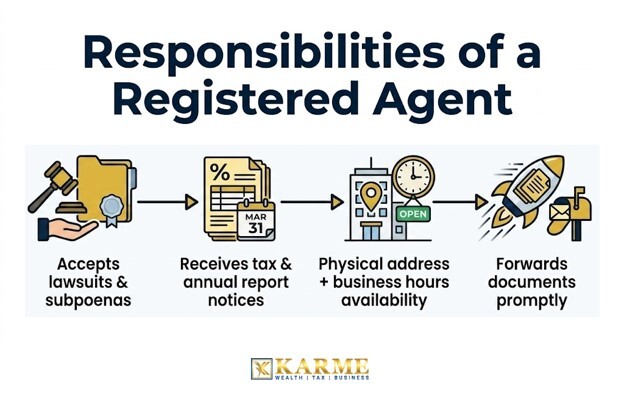
More specifically, a registered agent is responsible for:
- Accepting lawsuits, subpoenas, and official court notices.
- Receiving annual report reminders, tax notices, and other documents from the State.
- Keeping a physical street address and being available during normal business hours.
- Quickly forwarding every legal or official document to the business owner.
Who Can You Use as Your Registered Agent?
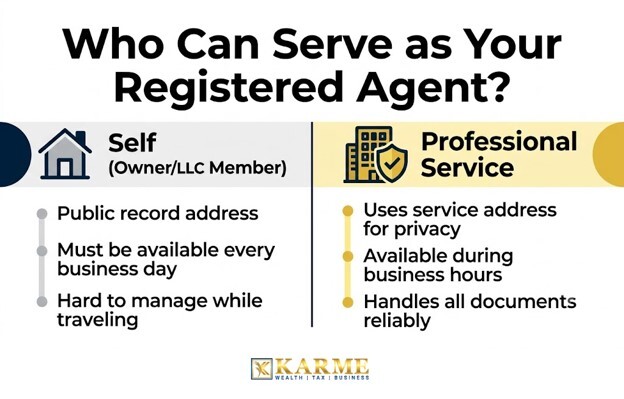
Most businesses have two choices. They can act as their own registered agent or hire a professional registered agent.
Acting as Your Own Agent
A business owner, LLC member, or company officer can serve as the registered agent if they meet their State’s requirements. In most states, this means having a physical street address in the State where the business is registered.
That said, serving as a registered agent carries several responsibilities:
- You must remain available every business day, even when traveling or working from another location.
- Your business address becomes part of the public record and can be accessed by anyone.
Using a Professional Service
Just like most business services, such as keeping a bookkeeper, many business owners choose to hire a professional registered agent instead of handling the role themselves.
A professional registered agent service designates a person to remain available during business hours to receive important documents. They also help protect your personal address and privacy by using their own business address. As a result, you can receive important notices on time and respond effectively without delays.
What Happens Without a Registered Agent?
If your business does not maintain a registered agent, it can fall out of good standing with the State. As a result, the State may administratively dissolve the business, which means it will no longer be legally recognized as an active business entity.
Choosing the Right Registered Agent
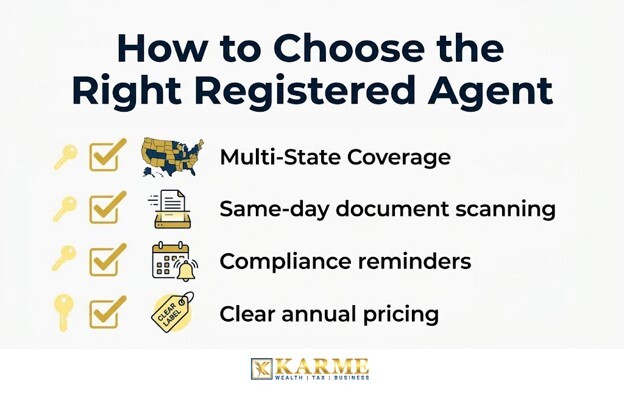
When choosing a registered agent, consider the following practical factors before signing up:
- Multi-State Coverage: If your business operates in more than one State, choose a service that can serve as your registered agent in each one.
- Fast Document Scanning: Choose a company that scans and forwards legal documents the same day they arrive.
- Compliance Reminders: Look for a service that sends reminders for annual reports and filing deadlines.
- Clear Pricing: Choose a provider with clear annual fees and no hidden renewal costs.
FAQs
What is a registered agent for a corporation?
It’s the person or entity named in a corporation’s incorporation documents to accept legal notices and state mail on its behalf. A corporation must have a registered agent in every State where it is incorporated and in every State where it is registered to do business.
What does a registered agent do for a business?
A registered agent accepts legal documents, such as lawsuits, and official notices from state agencies on behalf of the business. The agent then relays those documents to the business promptly, keeping owners informed of legal and compliance matters without delay.
How do you change a registered agent for an LLC?
To change a registered agent, the LLC must file a “Change of Registered Agent” or “Statement of Change” form with the State’s business filing office. You may have to pay a small filing fee, depending on your State.
Can a P.O. box serve as a registered agent address?
No. Most states require the registered agent to have a physical street address where legal documents can be delivered in person during normal business hours. A P.O. box does not meet this requirement.
What happens if a registered agent resigns without notice?
If a registered agent resigns, the State notifies the business and provides a limited window to appoint a replacement. Failing to act within this period can lead to a loss of good standing.
Do all states require the same registered agent rules?
No. Every State requires businesses to have a registered agent, but the rules are not identical. Requirements such as business hours, filing fees, and the amount of time allowed to replace a registered agent vary by State.
Final Words
Understanding what a registered agent is for an LLC is foundational to keeping a business compliant and in good standing. After setting up your business, this small designation carries real weight for staying protected under the law.
At Karme, we make this process simple from the start. Our registered agent services include a physical address to receive important documents and protect your privacy. By serving as the official point of contact between your business and the State, we ensure important documents are received and forwarded to you on time. Contact us today to get started.