Rental property accounting is the process of recording rental income, tracking property expenses, and organizing financial records for each unit landlords own.
If you manage your properties yourself, it is easy to mix accounting and bookkeeping into one messy spreadsheet, which creates problems at tax time.
This article gives you practical tips for tracking income, categorizing expenses, recording depreciation, and keeping your records organized throughout the year.
You can also work with a professional bookkeeping service to ensure your records stay accurate and ready for taxes each year.
The Basics of Rental Property Accounting
Rental property accounting is the process of recording income, tracking expenses for each property, categorizing transactions, and recording depreciation to get a clear picture of each property’s actual financial position.
This also applies to bookkeeping for real estate agents. If you own rental units while earning commissions from clients, you need separate records for each income stream.
Keeping separate records also helps you see which properties are actually profitable. As your portfolio grows, professional accounting services can help you manage more complex financial records.
Find the monthly bookkeeping package that fits your business activity and support needs.
Explore Our Bookkeeping Packages
Practical Tips for Rental Property Accounting and Bookkeeping
Research by iPropertyManagement shows that roughly 80% of individually owned rental properties are self-managed by their owners. A reliable bookkeeping and accounting system makes property management much easier by keeping your rental finances accurate, organized, and easy to review.
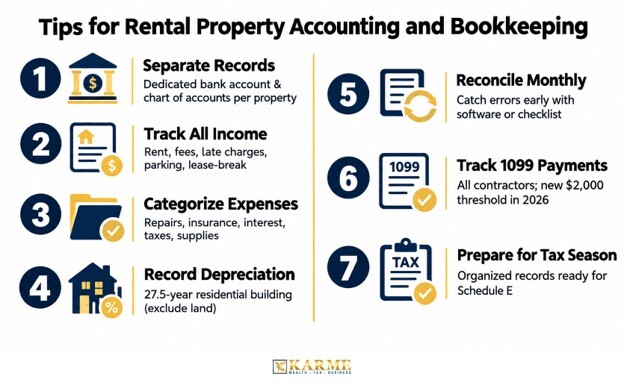
Here are some practical tips that help.
1. Keep Each Property Record Separate
Keep separate financial records for each rental property. A dedicated bank account for each property can also help keep income and expenses organized and prevent transactions from getting mixed up.
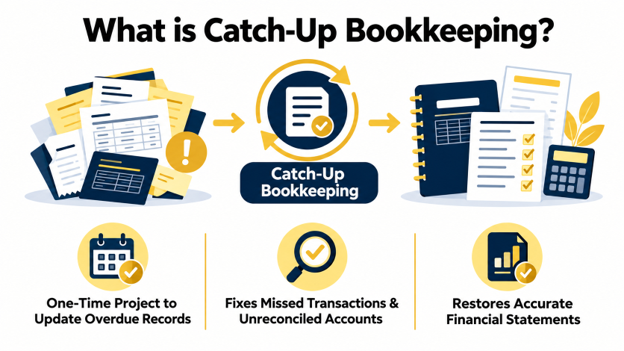
Start with a chart of accounts for each property or each business entity if you own properties through different LLCs. If you’re already behind on your books, catch-up bookkeeping can help you organize missing transactions and rebuild incomplete financial records.
2. Track All Rental Income
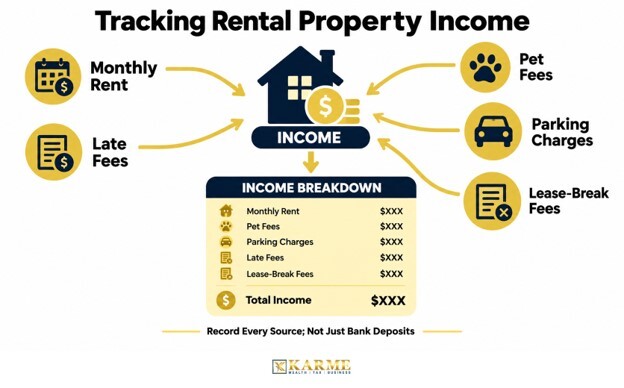
Proper bookkeeping for rental property includes recording every source of rental income as you receive it. This includes monthly rent, late fees, pet fees, parking charges, and lease-break fees. Do not record only the total amount deposited into your bank account.
Detailed income records give you a clearer picture of your property’s gross income and cash flow before expenses. They also make it easier to spot missing payments and prepare accurate financial statements.
3. Categorize Every Expense
Record each expense under a specific category in your chart of accounts, such as repairs, insurance, mortgage interest, property taxes, management fees, or supplies. Consistent categories simplify financial reviews and tax filing while reducing deduction errors.
For example, replacing a broken water heater may seem like a repair, but a new water heater may qualify as a capital improvement instead. Proper rental property bookkeeping helps you identify and record these expenses correctly when they occur.
4. Record Depreciation Accurately
Depreciation is a non-cash expense that can reduce your taxable rental income. Proper accounting for rental property involves recording depreciation each year along with your other rental expenses.
Under U.S. tax rules, residential rental property is depreciated over 27.5 years. However, only the building and other qualifying improvements are depreciable, not land. So, you need to separate the building value from the land value when calculating depreciation.
The key is to record depreciation consistently each year and keep your records updated. This helps maintain accurate financial statements and avoid missed deductions or tax errors.
5. Reconcile Accounts Monthly
Make account reconciliation part of your monthly routine. It helps you catch missing transactions, duplicate entries, and other errors before they become harder to fix.
A rental property bookkeeping spreadsheet can work for a small portfolio. But as you add properties, it’s best to switch to a rental property bookkeeping template or software such as QuickBooks or Xero for landlords. A monthly bookkeeping checklist can also help you complete the same tasks consistently.
6. Track 1099 Contractor Payments
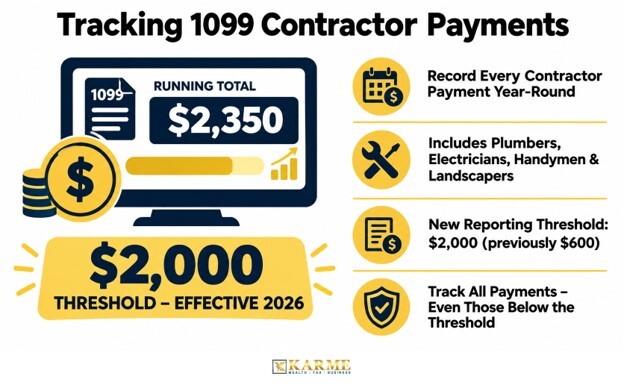
Record every payment you make to contractors, including plumbers, electricians, handymen, and landscapers. Keeping a running record throughout the year makes 1099-NEC reporting easier and prevents a last-minute rush during tax season.
Under the One Big Beautiful Bill Act, the reporting threshold for Forms 1099-NEC and 1099-MISC increases from $600 to $2,000 for payments made on or after January 1, 2026.
However, you should still track all contractor payments throughout the year. You may not know until the end of the year whether a contractor’s total payments meet the reporting threshold.
7. Prepare For Tax Season
Year-round bookkeeping makes tax accounting for rental property much easier. Once you have categorized your rental income, expenses, and depreciation, you can use those records to complete Schedule E without reconstructing an entire year’s transactions.
Keep receipts, mileage logs, and contractor invoices with the bookkeeping entries they support. For digital copies, include the date and vendor name in each file name so you can find them quickly later. Complete records also make rental income tax preparation easier because you can work from organized and accurate information.
FAQs
Q1. How long should landlords keep rental property financial records?
Keep most records for at least three years after filing the related tax return. Keep them for six years if you underreport income by more than 25%. For purchases and improvements, keep records until three years after selling the property.
Q2. Is a spreadsheet enough for rental property bookkeeping, or do you need software?
A spreadsheet works for one property with few transactions. As you add properties, software can simplify bookkeeping with bank feeds, property-specific reports, and automatic totals. These features also reduce manual entry errors.
Q3. What’s the difference between a repair and a capital improvement for tax purposes?
A repair restores a property to its normal working condition, like patching a leak. You can usually deduct the cost in the year you pay it. A capital improvement adds value to the property or extends its useful life, like adding a new roof. It is typically depreciated instead of deducted all at once.
Q4. Does a landlord with only one rental property still need a separate bank account?
Yes. Even for one property, a dedicated account creates a clean statement trail that supports your deductions. If an LLC owns the property, separate funds also help maintain the LLC’s liability protection.
Q5. Does accounting differ for short-term rentals vs. long-term leases?
Yes. Short-term rentals require you to track frequent bookings, platform fees, and occupancy taxes. Stays averaging seven days or less may also have different tax treatment.
Q6. What financial reports should a landlord review regularly?
Do not rely only on a list of transactions. Review a monthly profit and loss statement and cash flow summary for each property. A rent roll also gives you a quick look at which tenants have paid and which units are vacant.
Final Words
Consistent rental property accounting and bookkeeping keeps you ready for tax season, lender reviews, or a future portfolio sale. You can avoid the year-end scramble and keep your financial records in order throughout the year. The right professional support can make this process a whole lot easier.
At Karme, we handle transaction categorization, bank reconciliations, chart of accounts setup, and QuickBooks support with your rental portfolio in mind. With more than a decade of bookkeeping experience, our team helps keep your records accurate, organized, and ready when you need them. Get in touch with us today!